

The “No Response” Problem in Co-Parenting: How Silence Impacts Decisions
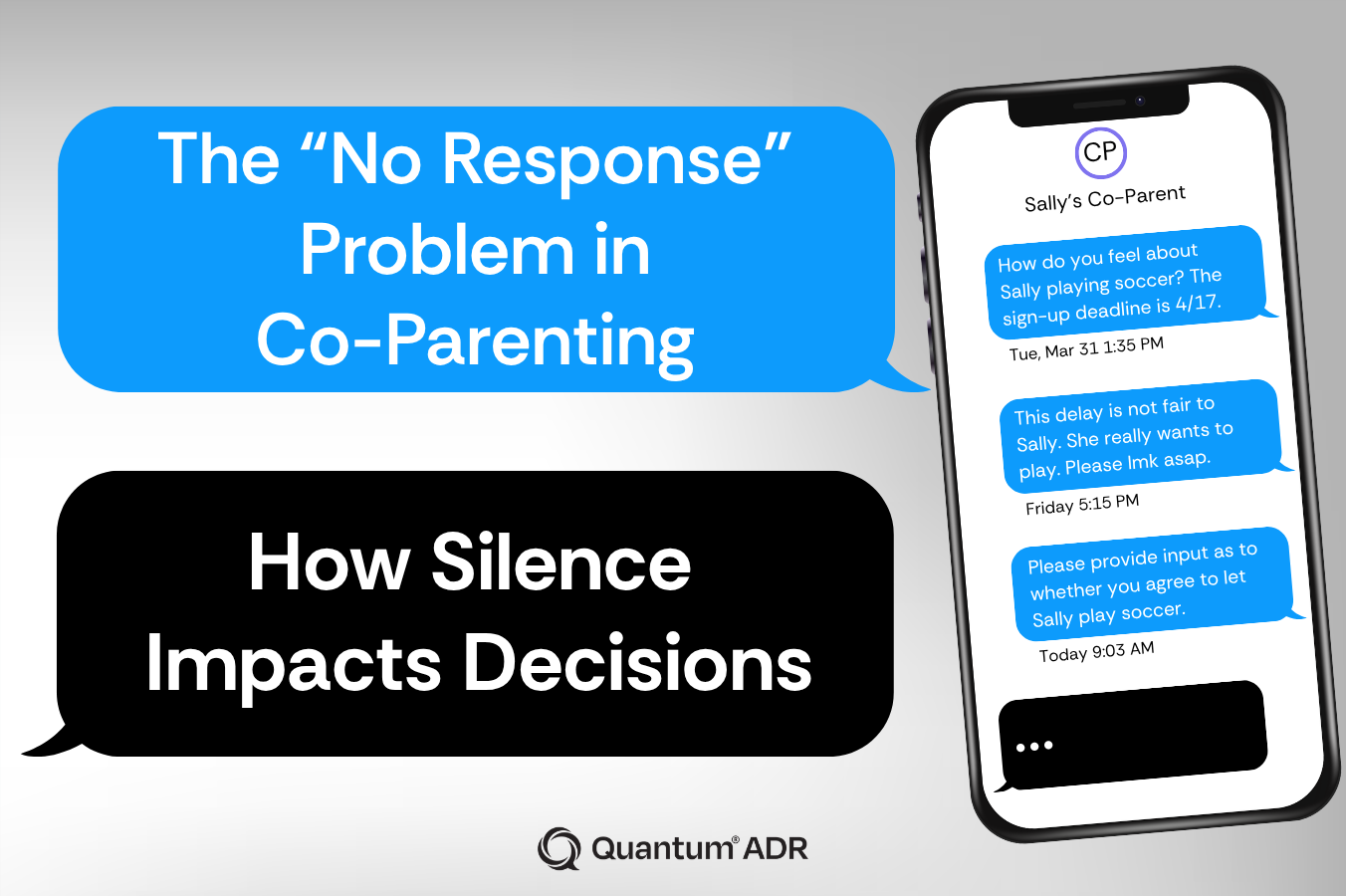
The problem isn’t always disagreement. It’s no response. A message gets sent, a decision needs to be made, and then…nothing. No reply, no yes, no no. Just silence; and in co-parenting, silence isn’t neutral. It decides things.
What Silence Actually Does
When one parent doesn’t respond, the decision doesn’t just pause. It drifts. Deadlines pass. Opportunities for the children close. Plans become last-minute scrambles. And the child – the one who depends on that decision – ends up waiting. Not because someone made a bad decision. Because no one made one at all.
Why It Happens
Often, it’s not even intentional. Sometimes it’s avoidance. Sometimes it’s overwhelm.
Sometimes it’s not knowing what to say, or how it will land. And sometimes, yes – it’s control.
But the reason matters less than the result. Because the result is always the same. The decision doesn’t get made.
The Hidden Problem
What makes this especially difficult is that it doesn’t look like conflict. There’s no argument. No blow-up. On the surface, it looks like…nothing. But underneath, everything is stuck; and over time, that “nothing” becomes the pattern.
Why “We’ll Just Wait” Doesn’t Work
A lot of co-parenting systems rely on this idea: “We’ll figure it out.” And when that doesn’t happen: “We’ll wait.” But waiting isn’t a neutral strategy. It shifts the burden to the child’s timeline – school deadlines, activities, medical needs, real life. And real life doesn’t wait.
What Actually Works
What keeps things moving isn’t perfect communication. It’s structure. Clear notice requirements. Defined response windows. A shared understanding of what happens if there’s no response. Because once that’s in place, something changes.Silence no longer controls the outcome.
Designing Around Silence
Strong agreements don’t assume perfect engagement. They plan for the moments when it breaks down. That can include: a set number of days to respond; a requirement that requests be made in a defined way; implied consent if no response is received within the window; a path forward when agreement doesn’t happen; and where appropriate, the involvement of a parenting coordinator with the authority to keep things moving. Not as escalation. As infrastructure.
How This Plays Out in Practice
In high-conflict situations, this is often where cases stall. Not because parents disagree on every issue. But because decisions never fully land. This is where enforcement and modification come into play – not as punishment, but as a way to restore movement. Because a system that can’t produce decisions isn’t a system that works.
Final Thoughts
If your agreement doesn’t address silence, it invites it; and when silence becomes the default, decisions get made anyway – just not in a way that serves the child. The goal isn’t perfect communication. It’s a system that keeps life moving, even when communication isn’t. That’s what structure is for.
At QuantumⓇ, this is the focus. Not just resolving conflict, but designing systems that hold up when things don’t go as planned, when someone doesn’t respond, when agreement isn’t there, and when life keeps moving anyway.
Our Two-Coach ApproachⓇ brings together legal structure and relational insight to build agreements that don’t rely on perfect behavior to function. We focus on agreements that keep decisions moving, we reduce the need for repeated intervention, and we support a more stable day-to-day experience for children.
The goal isn’t just resolution. It’s creating something that actually works going forward.
